How to Budget Biweekly Paychecks (and Use the Third Paycheck)
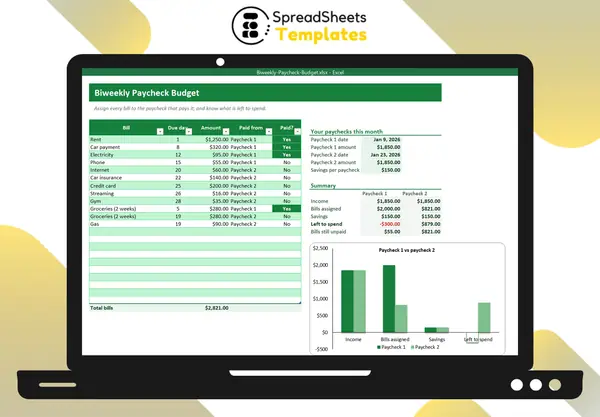
If you are paid every two weeks, a classic monthly budget can feel wrong: your money arrives in two chunks, but your bills follow the calendar. Budgeting by paycheck fixes that mismatch.
The idea in one sentence
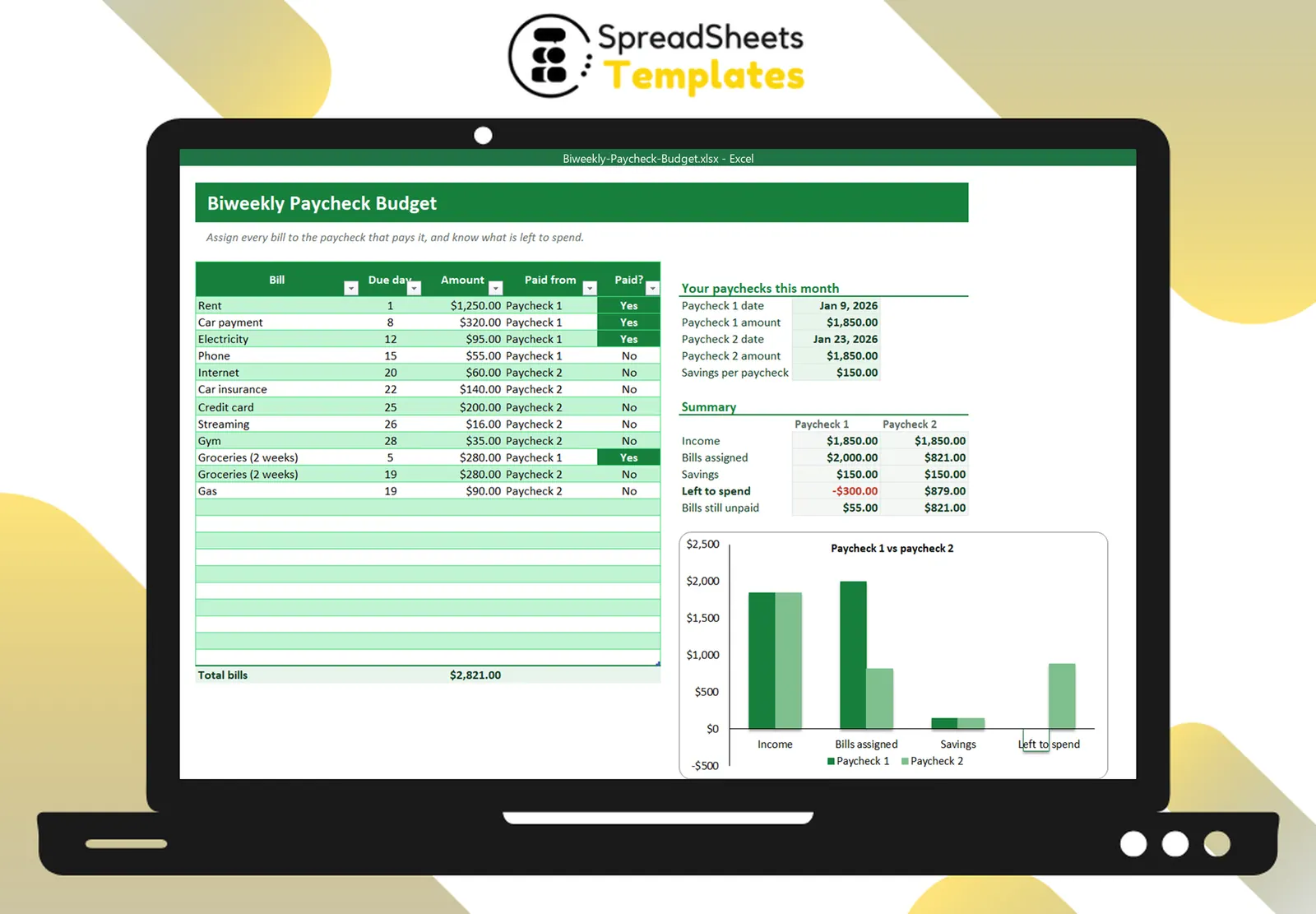
Each bill is paid from a specific paycheck — the one that arrives before its due date — and whatever is left from that paycheck after bills and savings is what you can spend until the next one.
Step 1: List your bills with due days
Write every recurring bill with the day of the month it is due and the amount: rent, car payment, utilities, phone, insurance, credit cards, subscriptions. Add the variable costs too, like groceries and gas, split per two weeks.
Step 2: Assign each bill to a paycheck
If your paychecks arrive around the 4th and the 18th:
- bills due between the 4th and the 17th → paid from paycheck 1;
- bills due between the 18th and the 3rd → paid from paycheck 2.
Try to balance the two. If paycheck 1 carries rent and everything else, ask your creditors to move a due date — many will.
Step 3: Pay yourself first
Decide a fixed savings amount per paycheck and treat it as a bill. Even $50 per check becomes $1,300 a year.
Step 4: Know your “left to spend”
For each paycheck: income − assigned bills − savings = left to spend. That number is your budget for food out, fun and everything else until the next payday. When it is gone, it is gone.
The two “extra” paychecks
Biweekly pay means 26 paychecks a year, not 24. Two months each year have three paydays. Since your budget runs on two paychecks a month, the third one is free money. Good uses:
- build or refill your emergency fund;
- make an extra debt payment (see the Debt Snowball Calculator);
- prepay an annual expense.
To find those months, list all 26 paydays from your first payday of the year, adding 14 days each time.
Track what is paid
Mark each bill as paid when you pay it. Seeing “bills still unpaid from paycheck 2: $415” prevents the classic mistake of spending money that already has a job.
Template
The Biweekly Paycheck Budget does all of this: paycheck dates and amounts, bills assigned to each paycheck with a paid flag, left to spend per paycheck, and a calendar of the 26 paydays with the third-paycheck months highlighted.