Bookkeeping for Small Business: A Beginner’s Guide
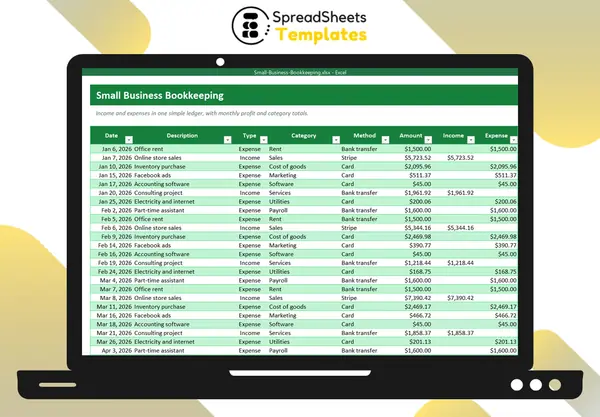
Bookkeeping simply means recording the money that comes in and goes out of your business. You don’t need accounting software to start — you need a consistent habit and a clear structure.
Separate business and personal money
Open a business bank account (and ideally a business card). Mixing personal and business transactions is the number one source of bookkeeping headaches and tax trouble.
What to record
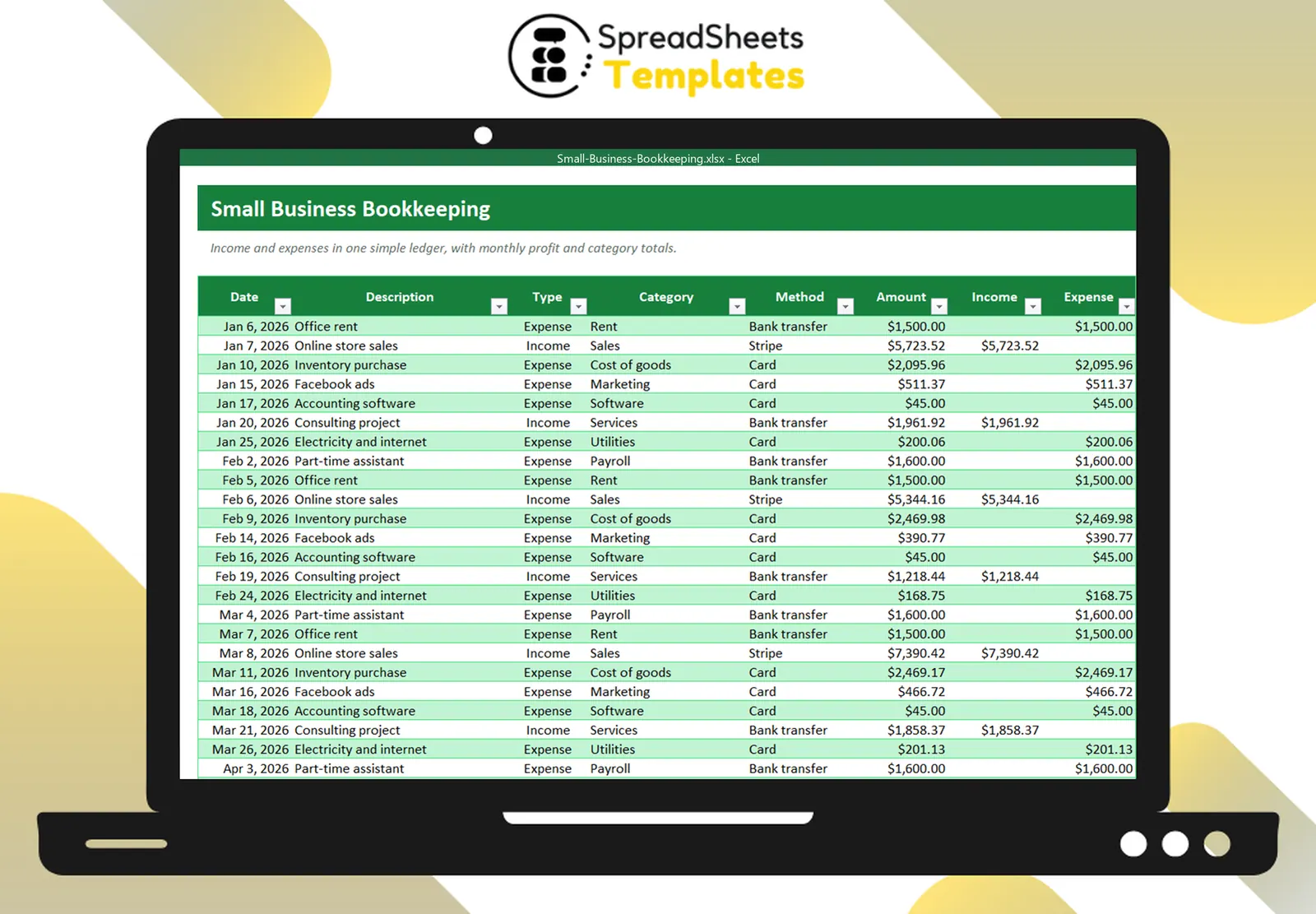
For every transaction:
- date;
- description (customer, supplier, what it was);
- type: income or expense;
- category;
- payment method (card, transfer, cash, PayPal…);
- amount.
Choose a short list of categories
Income: sales, services, other income. Expenses: cost of goods, rent, payroll, utilities, marketing, software, supplies, travel, insurance, bank fees, taxes, other. Match them to the lines on your tax form if you can — your accountant will thank you.
Single-entry is enough to start
Most small businesses and freelancers do well with single-entry bookkeeping: one line per transaction. Double-entry becomes important when you have inventory, loans, employees and a balance sheet to keep — usually with an accountant.
Monthly profit and loss
Once a month, total income and expenses:
- Profit = income − expenses
- Margin = profit ÷ income
In Excel, SUMIFS with a date range adds up a month:
=SUMIFS(Income, Date, ">="&DATE(2026,3,1), Date, "<"&DATE(2026,4,1))
Watching profit and margin month by month shows seasonality and whether growth is actually profitable.
Good habits
- Record weekly, not yearly.
- Reconcile monthly with the bank statement: every bank line should be in your ledger.
- Keep receipts in a folder per month (digital is fine).
- Set aside taxes — a percentage of each payment received, in a separate account.
- Review categories quarterly to cut what doesn’t pay off.
Template
Small Business Bookkeeping gives you a ledger with drop-down categories, a monthly profit and loss for the year with margins, totals by category and an income vs expenses chart. At year end, summarize the position with the Balance Sheet Template.