How Loan Amortization Works (and Why Extra Payments Matter)
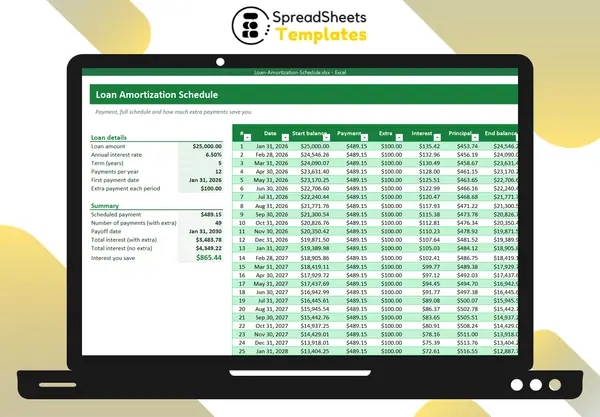
When you take a fixed-rate loan, your payment stays the same, but what it pays for changes every month. That process is amortization, and understanding it explains why extra payments early in a loan are so powerful.
The payment
The fixed payment is calculated so the loan reaches zero exactly at the end of the term. In Excel:
=PMT(rate/12, years*12, -amount)
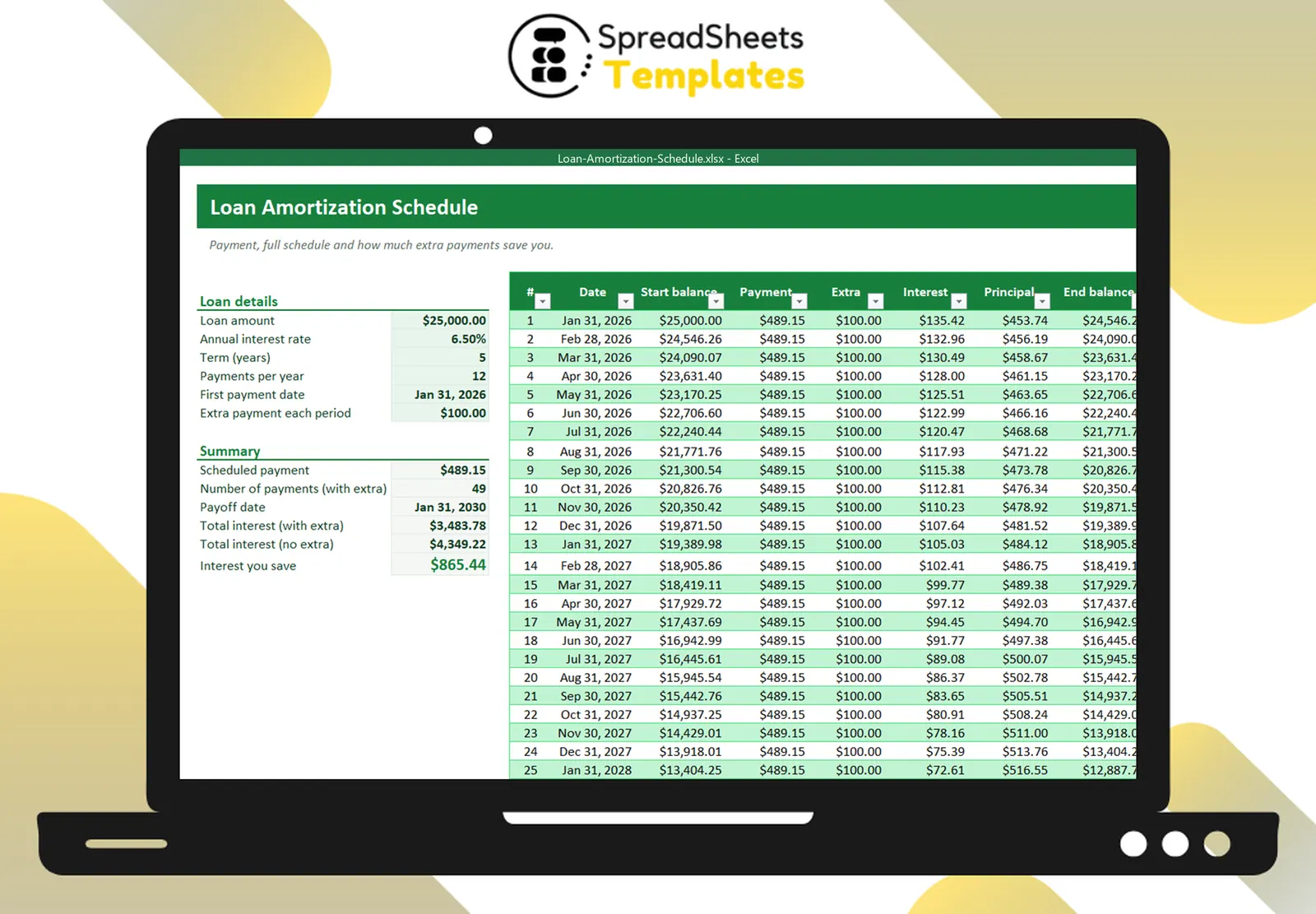
A $25,000 loan at 6.5% for 5 years has a payment of about $489.15 per month.
Interest first, principal later
Each month, interest is charged on the remaining balance:
- Interest = balance × rate ÷ 12
- Principal = payment − interest
- New balance = balance − principal
In month 1, interest on $25,000 is $135.42, so only $353.73 reduces the balance. By the last year, almost the whole payment goes to principal. On long loans like 30-year mortgages, early payments are mostly interest.
Building a schedule in Excel
Each row is one payment with: number, date, start balance, payment, interest, principal and end balance. The next row’s start balance is the previous row’s end balance. For the date, =EDATE(FirstPayment, n-1) adds months correctly.
What extra payments do
An extra payment goes 100% to principal. A lower balance means less interest next month, so more of your regular payment goes to principal too — a small snowball.
On the $25,000 loan, adding $100 a month:
- pays the loan off about a year earlier (49 payments instead of 60);
- saves roughly $865 in interest.
On a mortgage, the effect is much bigger in dollars.
Before paying extra, check
- Prepayment penalties in your contract (rare for most consumer loans, but check).
- That the extra goes to principal, not to “next month’s payment” — tell your lender.
- Higher-interest debts: paying a 22% credit card first beats prepaying a 6% loan.
Yearly view
Grouping payments by year — principal vs interest — shows how the loan shifts over time and helps with tax records if your interest is deductible.
Template
The Loan Amortization Schedule calculates the payment, the full schedule up to 360 payments, the payoff date and the interest saved with an extra payment, plus a by-year summary with a chart. Buying a home? The Mortgage Calculator adds taxes, insurance and PMI.