How Much Does It Cost to Start a Business? Build Your Estimate
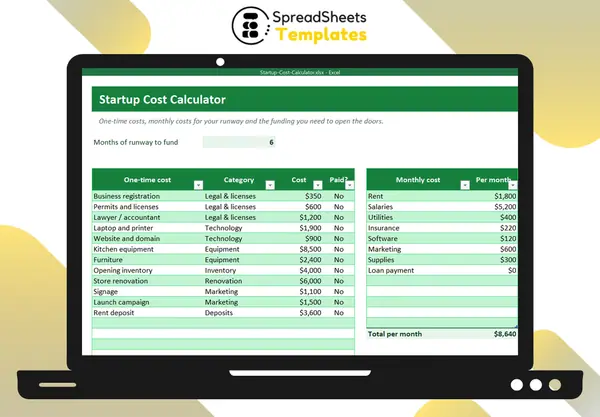
There’s no single answer to “how much does it cost to start a business?” — a consulting business may need $2,000, a restaurant $200,000. What you need is your own estimate, built in three parts.
Part 1: One-time startup costs
Costs you pay before or at opening:
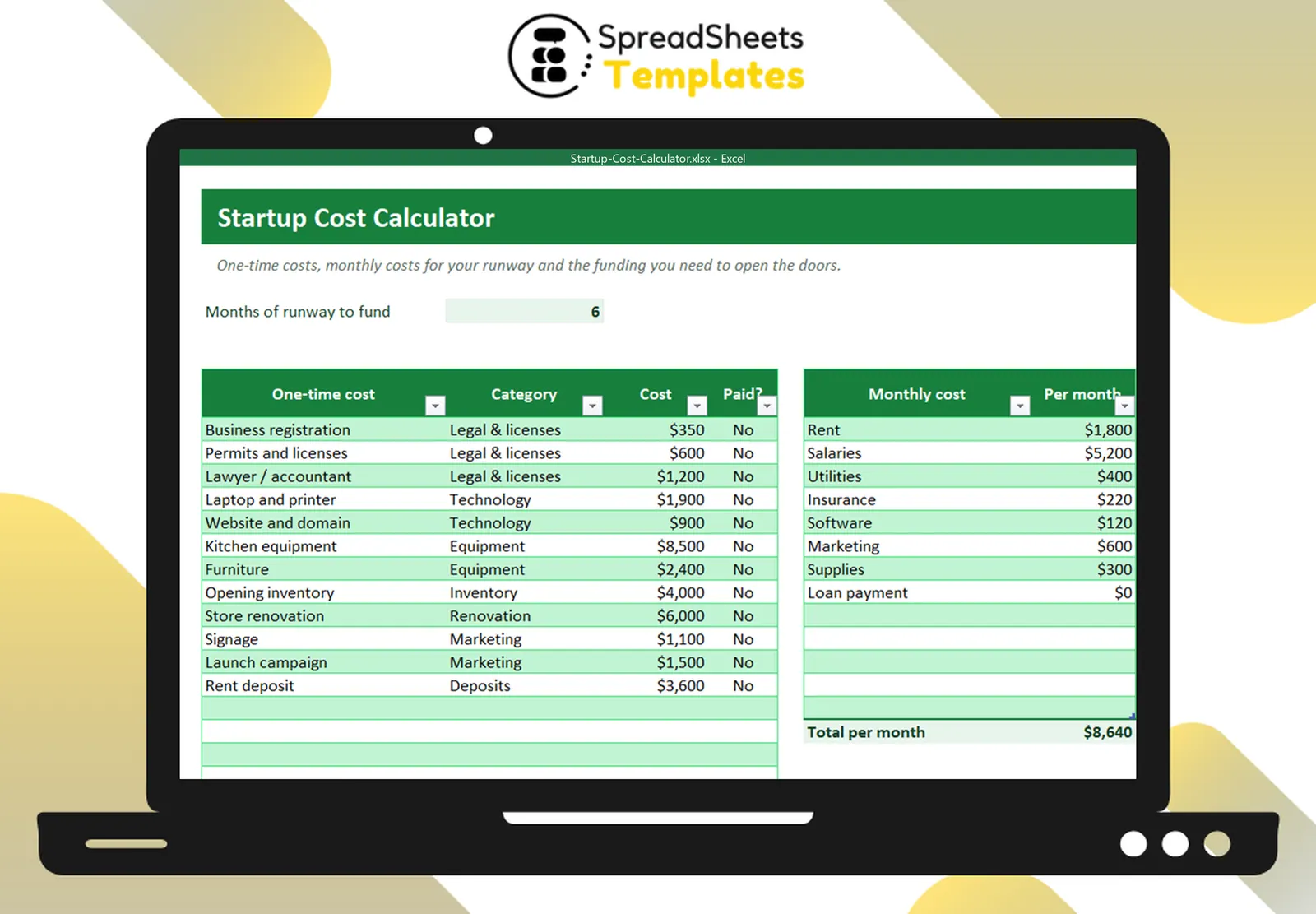
- Legal and licenses: registration, permits, lawyer, accountant.
- Equipment and furniture.
- Initial inventory.
- Renovation of the space and signage.
- Technology: computers, website, software setup.
- Launch marketing.
- Deposits: rent deposit, utility deposits.
Part 2: Monthly operating costs
What it costs to keep the doors open each month: rent, salaries (including your own minimum), utilities, insurance, software, marketing, supplies, loan payments.
Part 3: Runway
Few businesses are profitable from day one. Runway is how many months of operating costs you fund before sales cover them. A common recommendation is at least 6 months; more if sales take time to ramp up (B2B, restaurants).
Total needed = one-time costs + (monthly costs × months of runway)
Costs people forget
- Insurance (liability, property)
- Professional fees in the first year
- Credit card processing equipment and fees
- Initial stock of packaging and supplies
- Your own living expenses while the business grows
- A contingency of 10–15%
Funding sources
List what you have: personal savings, bank loans, family and friends, investors, grants. Funding − total needed = gap. If the gap is negative, you can reduce costs (lease equipment, start smaller), increase funding, or plan a longer path to opening.
Present it clearly
Banks and investors want to see categories, totals and how the money will be used. A one-page summary with a chart of costs by category is exactly what they expect.
Template
The Startup Cost Calculator organizes one-time costs by category, monthly operating costs, the runway calculation, funding sources and the funding gap, with a chart. Once you know your costs, use the Break-Even Analysis to see the sales you’ll need.