How to Price a Product: Margin, Markup and Fees
Pricing is where many small businesses quietly lose money: the price “looks right”, but after materials, packaging, shipping and platform fees, there’s little left. Here’s a simple way to price from your real costs.
Step 1: Find the real cost per unit
Add everything you spend to make and deliver one unit:
- materials or wholesale cost;
- packaging;
- shipping you pay (if not charged to the customer);
- per-order supplies (labels, inserts).
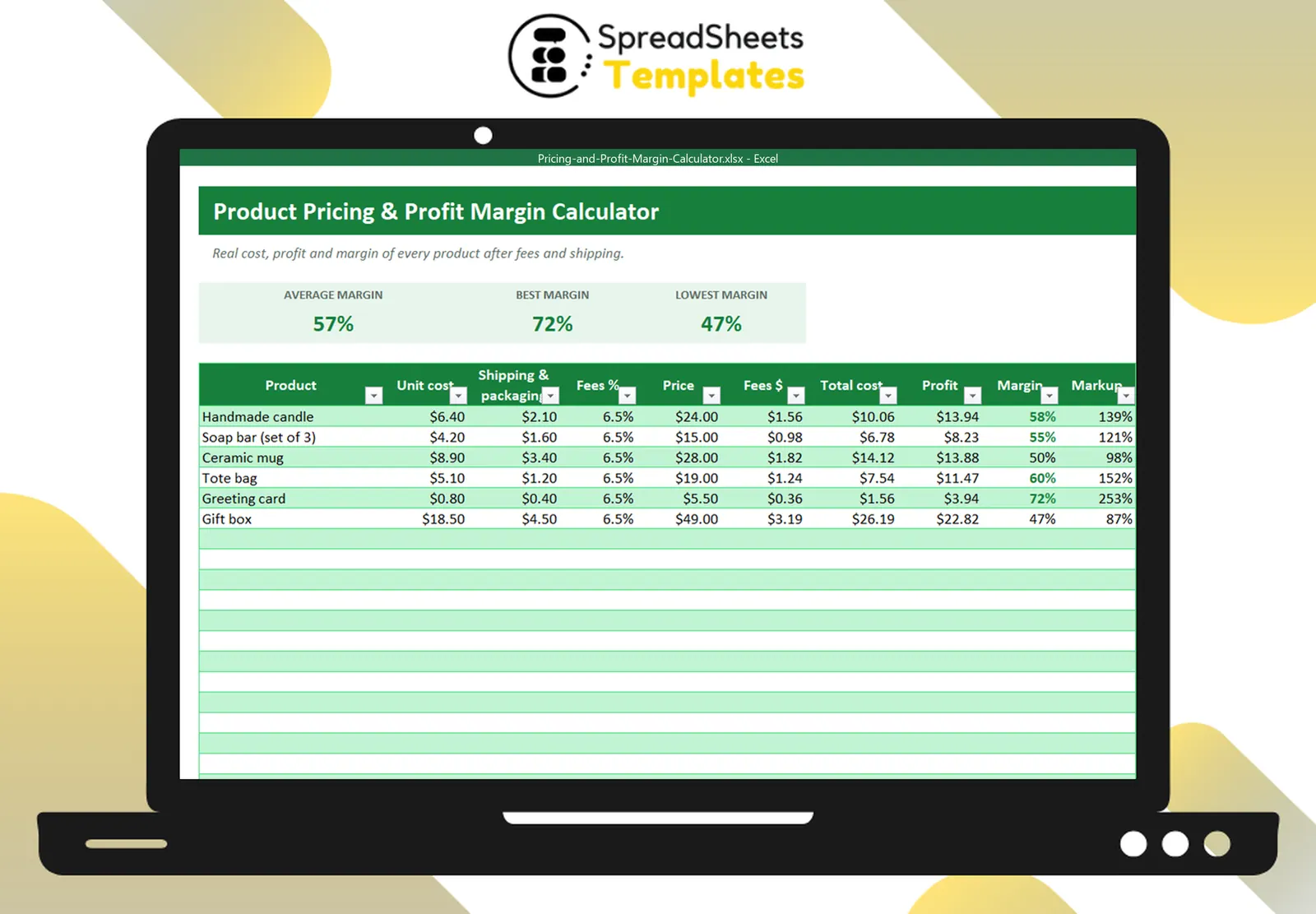
Then account for percentage fees: marketplace commissions, payment processing, ads per sale. A 6.5% fee on a $24 product is $1.56 — real money.
Step 2: Margin vs markup
These are not the same:
- Margin = profit ÷ price
- Markup = profit ÷ cost
A product that costs $10 and sells for $20 has a 50% margin and a 100% markup. Mixing them up leads to underpricing.
Step 3: Price for a target margin
If you want a given margin after percentage fees:
Price = cost ÷ (1 − fee % − target margin)
Example: cost $12 (product + shipping), fees 6.5%, target margin 45% → $12 ÷ (1 − 0.065 − 0.45) = $24.74. Round to a nice price like $24.99.
Step 4: Compare products
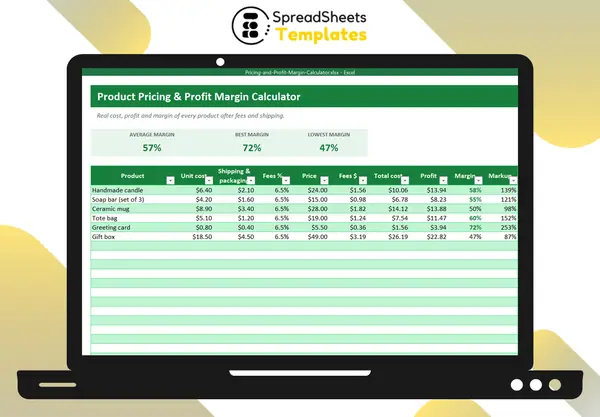
Put all your products in one table: cost, fees, price, profit, margin. You’ll usually find a few products with excellent margins and a few that barely break even. Options for the weak ones: raise the price, bundle them, reduce cost, or drop them.
Step 5: Sanity-check the market
Cost-based pricing gives you the minimum. Then look at competitors and the value you offer. If customers happily pay more, charge more — and if your price is far above the market, find a cheaper way to make the product or a better way to explain its value.
Margins to aim for
It depends on the business, but handmade and digital products often aim for 50%+ gross margin, retail for 30–50%. Below 30%, any increase in costs or fees can wipe out your profit.
Template
The Pricing & Profit Margin Calculator shows cost, fees, profit, margin and markup for up to 20 products with color alerts and a chart, plus a calculator for the price that gives your target margin. Then check volume with the Break-Even Analysis.