How to Build and Manage a Sales Pipeline
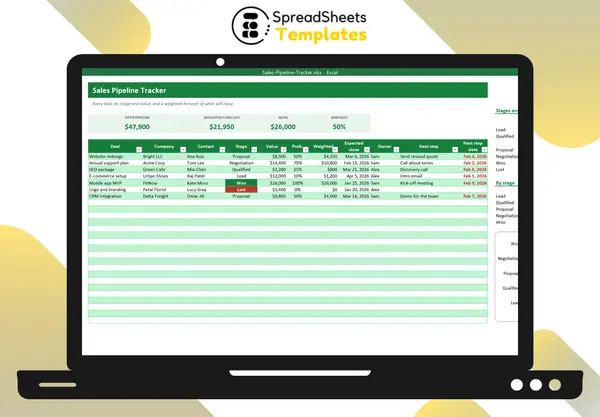
A sales pipeline is the list of all your open opportunities, organized by how close they are to closing. Managed well, it tells you what to do today and what revenue to expect next month.
Step 1: Define your stages
Keep it simple — 4 to 6 stages that match how your customers buy:
- Lead — a potential customer showed interest.
- Qualified — they have the need, budget and authority.
- Proposal — you sent a quote.
- Negotiation — discussing terms.
- Won / Lost.
Step 2: Assign probabilities
Give each stage a probability of closing: lead 10%, qualified 25%, proposal 50%, negotiation 75%, won 100%. Adjust them over time to match your real history.
Step 3: Record every deal
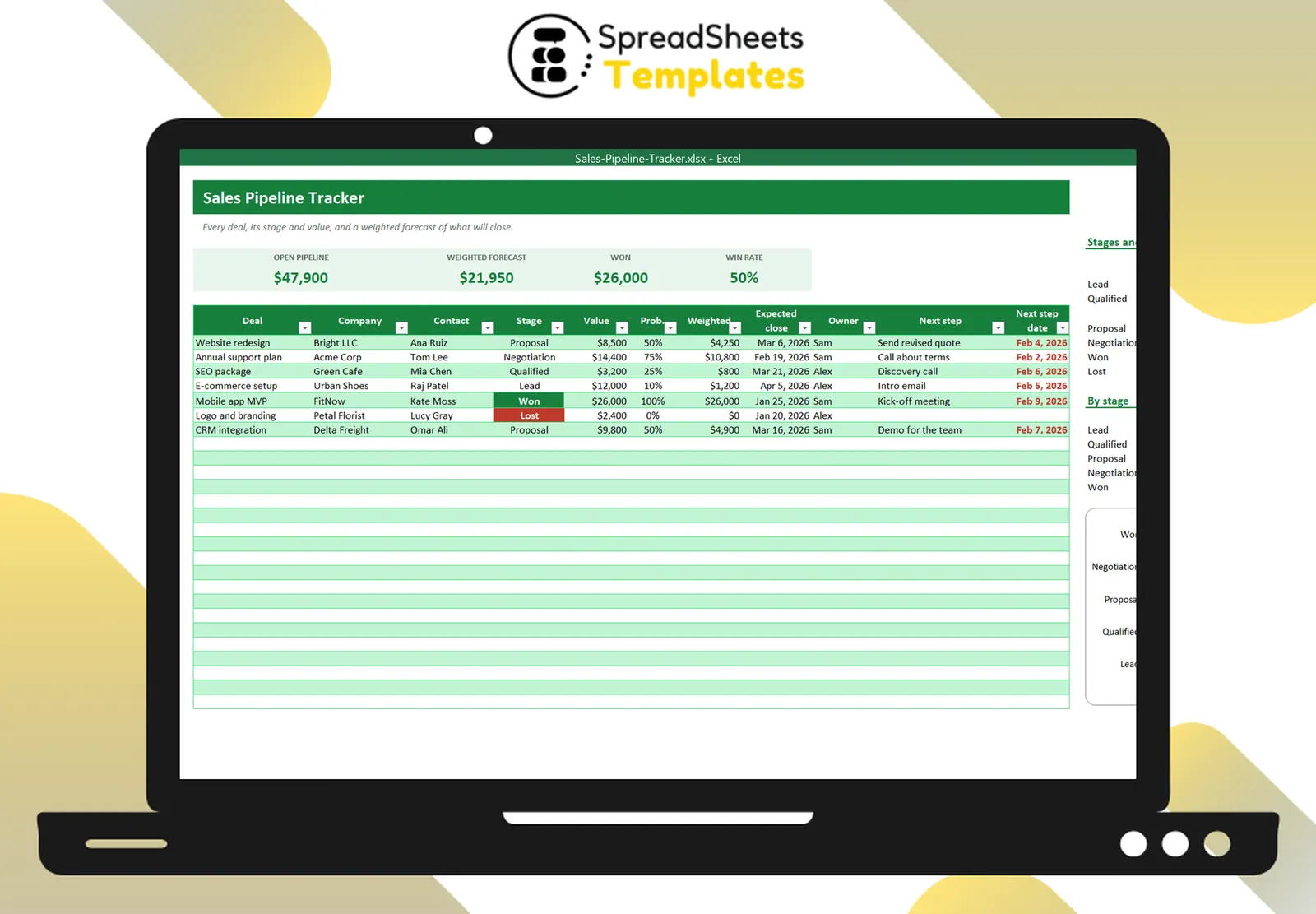
For each opportunity: deal name, company, contact, stage, value, expected close date, owner and — most important — the next step and its date.
Step 4: Forecast with weighted value
Weighted value = deal value × stage probability
A $10,000 deal in proposal counts as $5,000. Adding the weighted values of all open deals gives a forecast that’s much more realistic than adding full values.
Step 5: Keep a next step on every deal
Deals don’t die from a “no”; they die from silence. Every open deal should have a dated next step: send revised quote, call about terms, demo for the team. Review overdue next steps every morning.
Step 6: Review weekly
- Move deals forward (or backward) honestly.
- Close dead deals as Lost — a clean pipeline is a useful pipeline.
- Look at pipeline value by stage: lots of leads but few proposals means a qualification problem.
Win rate
Win rate = won ÷ (won + lost). Tracking it shows whether your process is improving and helps set realistic targets.
Template
The Sales Pipeline Tracker has deals with stages and editable probabilities, weighted value, next steps with overdue alerts, cards for open pipeline, weighted forecast, won and win rate, and a chart of value by stage.