How to Keep a Mileage Log for Taxes and Reimbursement
If you drive your own car for work, every business mile has value — as a tax deduction if you’re self-employed, or as reimbursement from your employer. But only if it’s recorded.
What a mileage log should include
For each trip:
- date;
- starting point and destination;
- business purpose (e.g., “client meeting — Acme Corp”);
- odometer at start and end (or total miles);
- trip type: business, medical, charity or personal.
Tax authorities generally expect records made at the time of the trip — not reconstructed in April.
Standard rate vs actual expenses
In the US you can usually choose between:
- Standard mileage rate: business miles × the IRS rate ($0.70 per mile for 2025). Simple, and most people use it.
- Actual expenses: the business share of fuel, insurance, repairs, depreciation, etc. More paperwork; sometimes a bigger deduction for expensive vehicles.
Medical and charity miles have their own (lower) rates. Rules vary by country — check with a tax professional.
Commuting doesn’t count
Driving from home to your regular workplace is generally personal commuting. Trips from the office to clients, between job sites, to the bank or supplier usually count.
Habits that make it easy
- Log at the end of each day (two minutes).
- Write the odometer reading on the first and last day of the year.
- Keep fuel and repair receipts anyway.
- Separate business and personal trips clearly.
Monthly summary
Totaling miles by type each month shows patterns and makes the yearly total instant. It also helps employees submit a monthly reimbursement.
Template
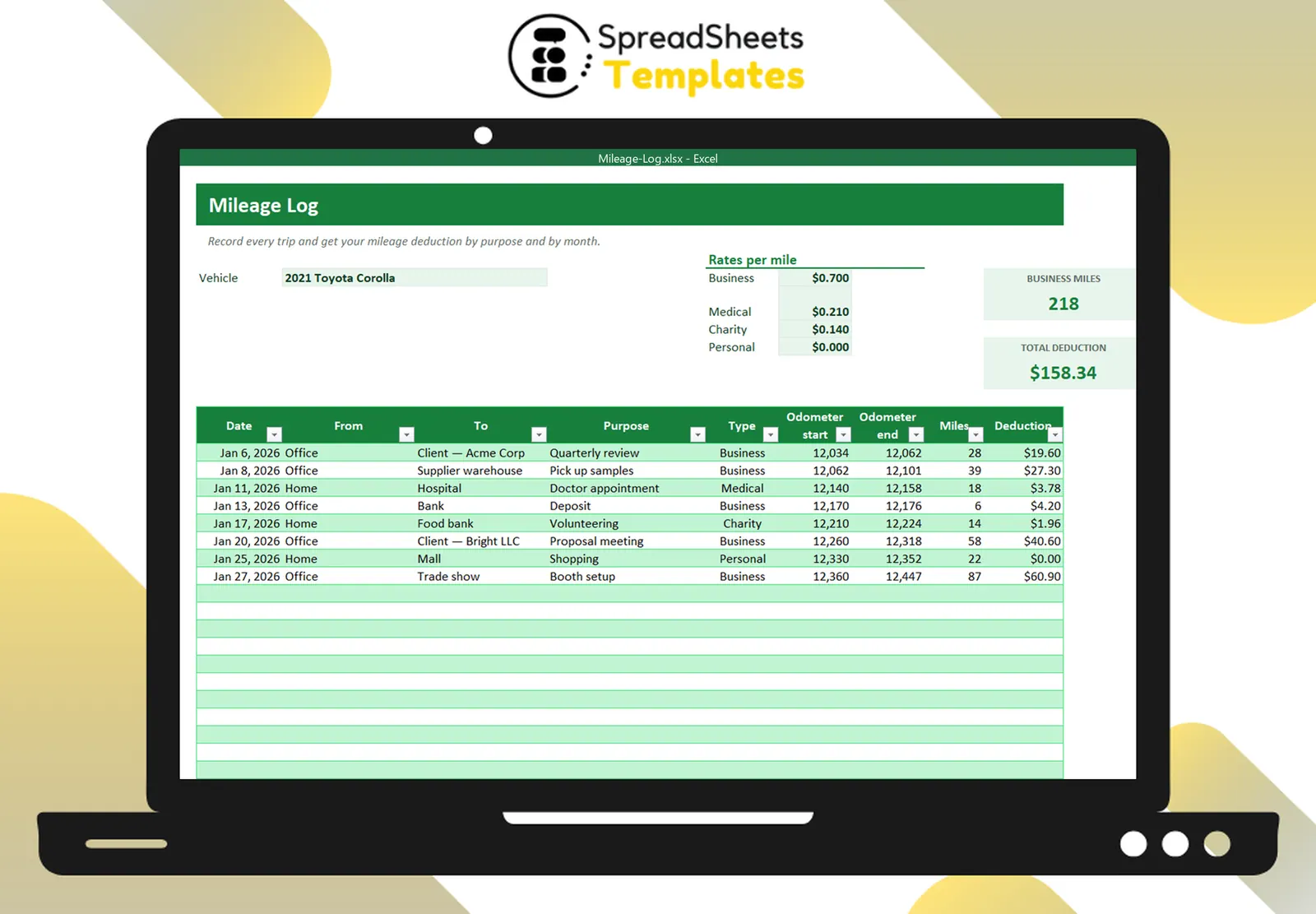
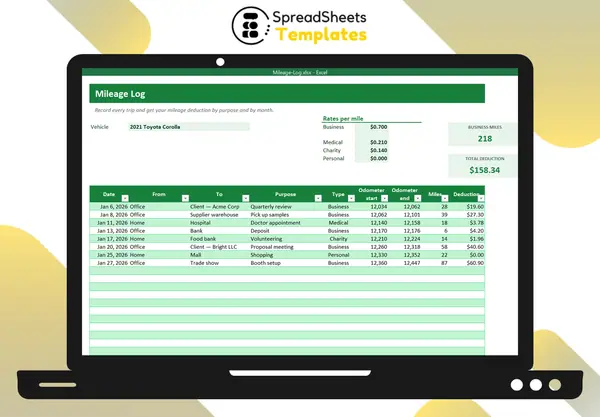
The Mileage Log records each trip with odometer readings, calculates miles and the deduction at the rate for each trip type, and summarizes miles and deductions by month. To claim reimbursement from your employer, use the Employee Expense Report.