How to Write Meeting Minutes (Template and Example)
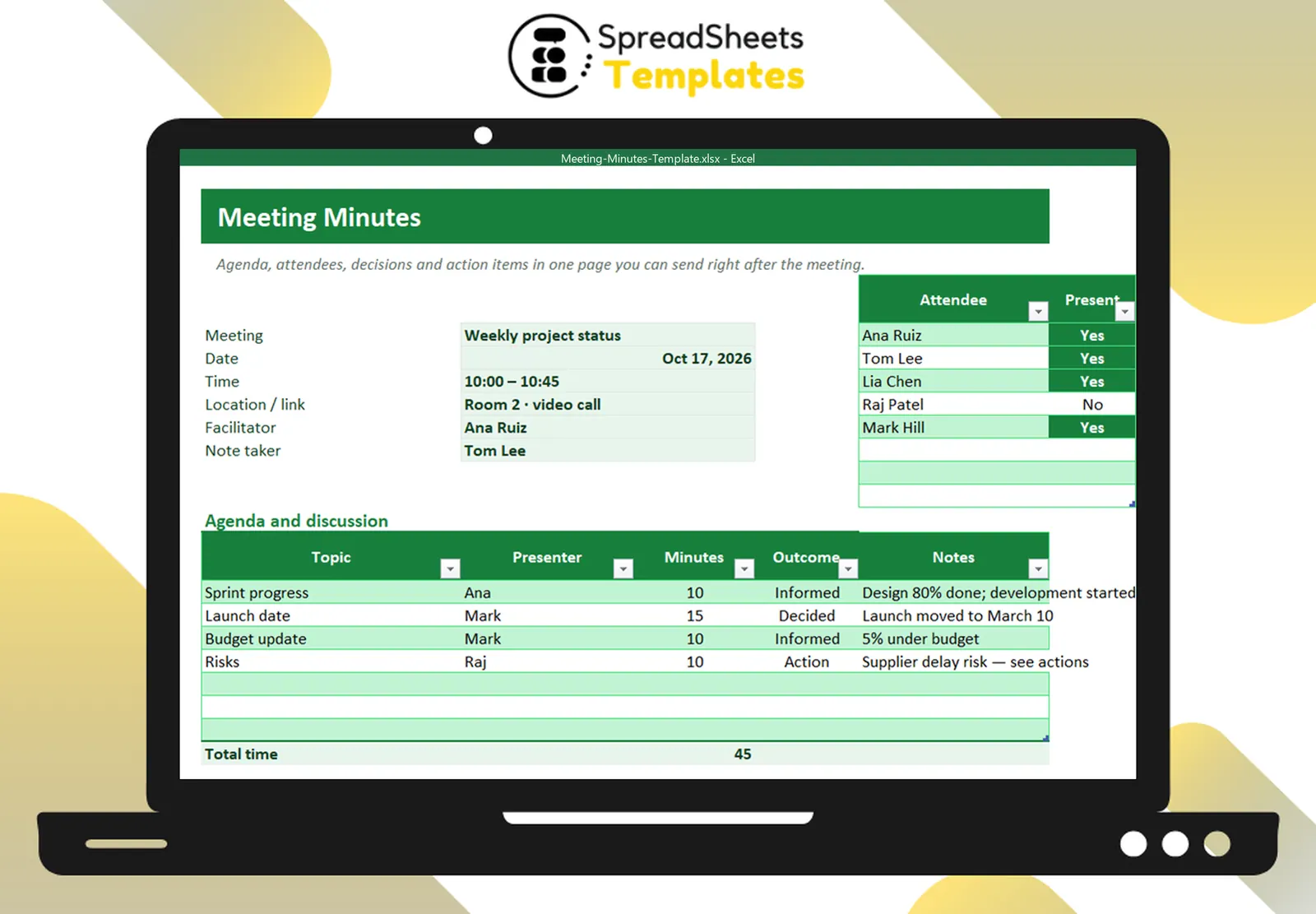
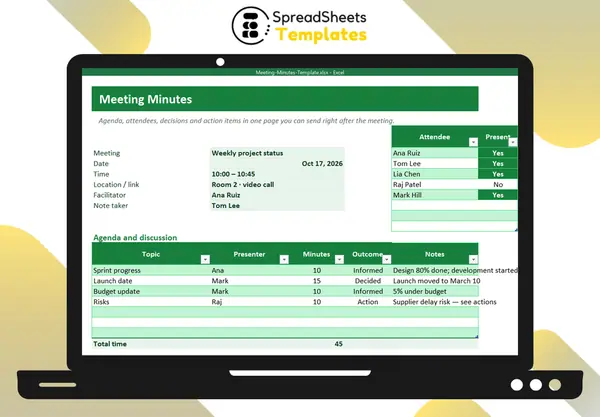
Meeting minutes are the official record of a meeting: who attended, what was discussed, what was decided and who will do what. Good minutes are short, clear and sent within hours.
What to include
- Details: meeting name, date, time, location or link.
- Roles: facilitator and note taker.
- Attendees (and who was absent).
- Agenda topics with the outcome of each.
- Decisions.
- Action items: what, who, when.
- Next meeting.
Don’t transcribe — summarize
Minutes are not a transcript. For each topic, capture the outcome in one or two lines:
- Informed: “Design 80% done; development started.”
- Decided: “Launch moved to March 10.”
- Action: “Raj to confirm delivery date with supplier.”
Write action items properly
Every action item needs three things: a clear action (starting with a verb), one owner and a due date. “Look into the supplier issue” isn’t an action item; “Raj confirms delivery date with supplier by Oct 21” is.
Tips to write minutes fast
- Prepare the template with the agenda before the meeting.
- Fill in outcomes live, during the meeting.
- Read the action items aloud at the end to confirm owners and dates.
- Send the minutes the same day.
Follow up
At the start of the next meeting, review last meeting’s action items. Overdue items get a new date or are escalated — that’s what makes meetings productive.
Template
The Meeting Minutes Template has fields for details and attendees, an agenda with outcomes and total time, decisions, and action items with owners, due dates, status and overdue alerts.