What Are Sinking Funds? How to Use Them in Your Budget
A sinking fund is money you set aside a little at a time for an expense you already know is coming. Instead of a $1,200 insurance bill hitting in one month, you save $100 a month for a year. When the bill arrives, the money is waiting.
Sinking fund vs emergency fund
- Emergency fund: for the unexpected — job loss, medical emergency, a broken furnace.
- Sinking fund: for the expected — insurance premiums, holidays, car maintenance, vacations.
Using your emergency fund for predictable expenses leaves you unprotected when a real emergency happens. Sinking funds keep the two separate.
Common sinking fund categories
- Car insurance and registration
- Car maintenance and tires
- Christmas and birthday gifts
- Vacations and travel
- Annual subscriptions and memberships
- Medical, dental and glasses
- Home repairs and maintenance
- Back to school
- Pet care
- Electronics replacement
How to calculate the monthly amount
For each fund: (goal − current balance) ÷ months until you need it.
Example: $800 for Christmas, it’s January, you have $0 → $800 ÷ 11 ≈ $73 a month.
In Excel: =MAX(0, Goal - Balance) / MAX(1, DATEDIF(TODAY(), DateNeeded, "m")). The amount recalculates every month, so if you skip one, it tells you how to catch up.
Where to keep the money
A single high-yield savings account is enough. You don’t need eight accounts — you need to know how much of the balance belongs to each fund. That’s what a tracker is for.
How to track it
Record every movement:
- Deposit when you transfer money into the savings account for a fund;
- Withdrawal when you pay the expense from the fund.
Balance = deposits − withdrawals, per fund. Add a “% funded” column so you see at a glance which funds are on track.
Start small
If the total monthly amount feels huge, start with the two or three funds that hurt the most (usually car and holidays) and add more as your budget frees up. Even a partially funded sinking fund means borrowing less when the bill comes.
Template
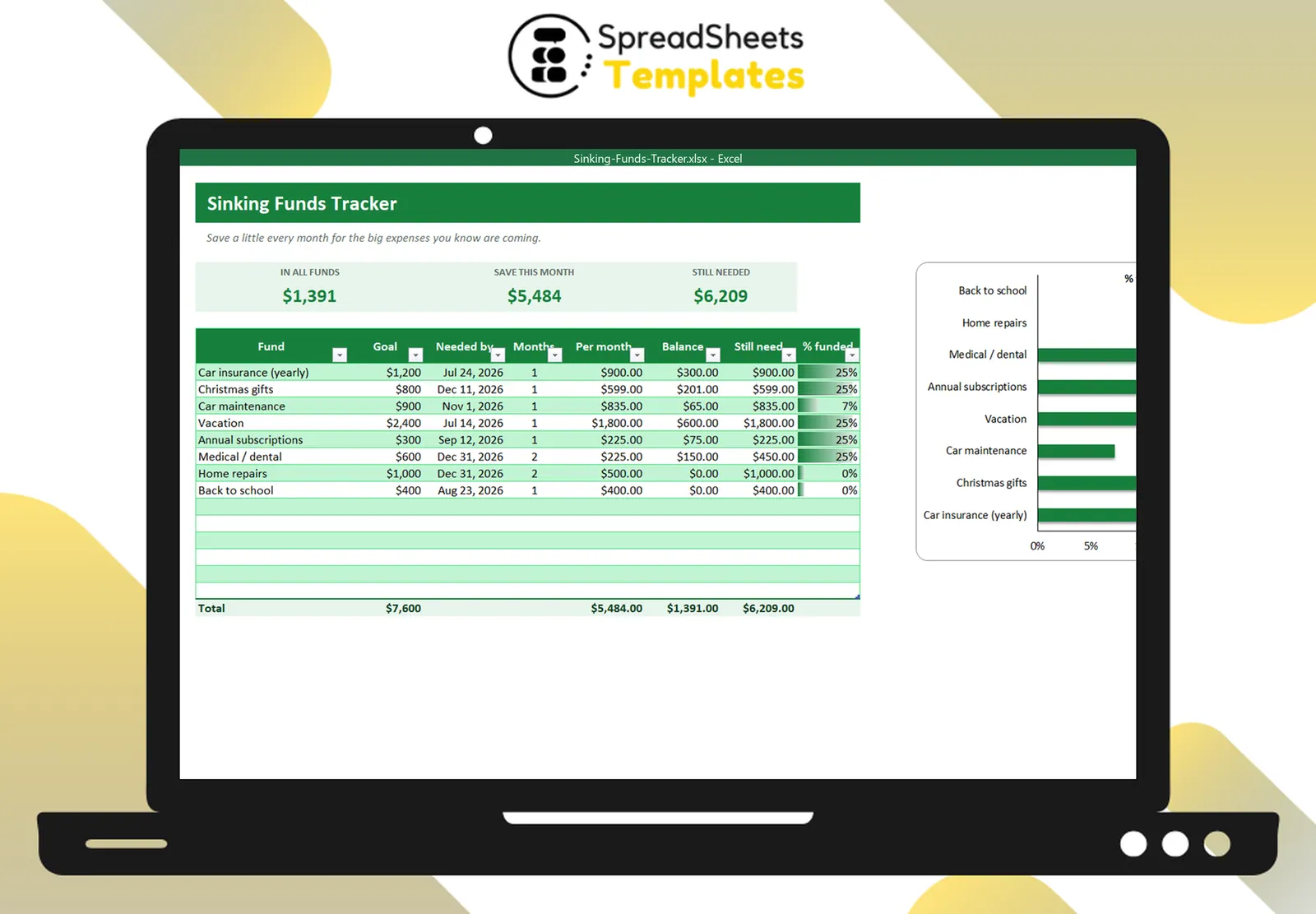
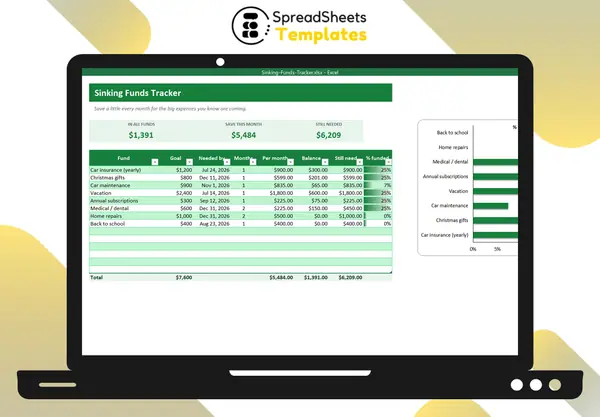
The Sinking Funds Tracker has funds with goals and dates, the monthly amount needed, balances from deposits and withdrawals, % funded with progress bars and a chart. For bigger dreams like a house or a car, use the Savings Goal Tracker.