How to Manage Petty Cash (Simple Rules + Log)
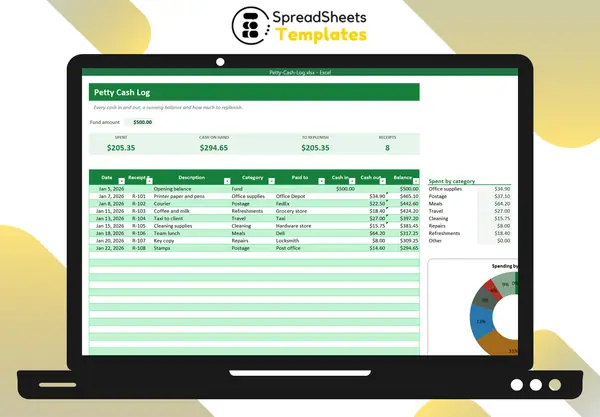
Petty cash is the small amount of money a business keeps on hand for minor expenses: postage, office supplies, a taxi, coffee for a meeting. It’s convenient — and it’s the easiest money to lose track of.
How a petty cash fund works
The most common method is the imprest system:
- Decide a fixed fund amount (for example, $500).
- Each time cash is used, a receipt goes in the box.
- At any moment, cash + receipts = fund amount.
- When the cash runs low, replenish exactly the total of the receipts.
Rules that keep it accurate
- One custodian. One person is responsible for the box.
- No receipt, no cash. Every withdrawal needs a receipt or a signed voucher.
- Set a limit per purchase (e.g., $50). Bigger purchases go through normal payment.
- Lock it up and count it regularly.
- Never mix petty cash with personal money or sales cash.
What to record
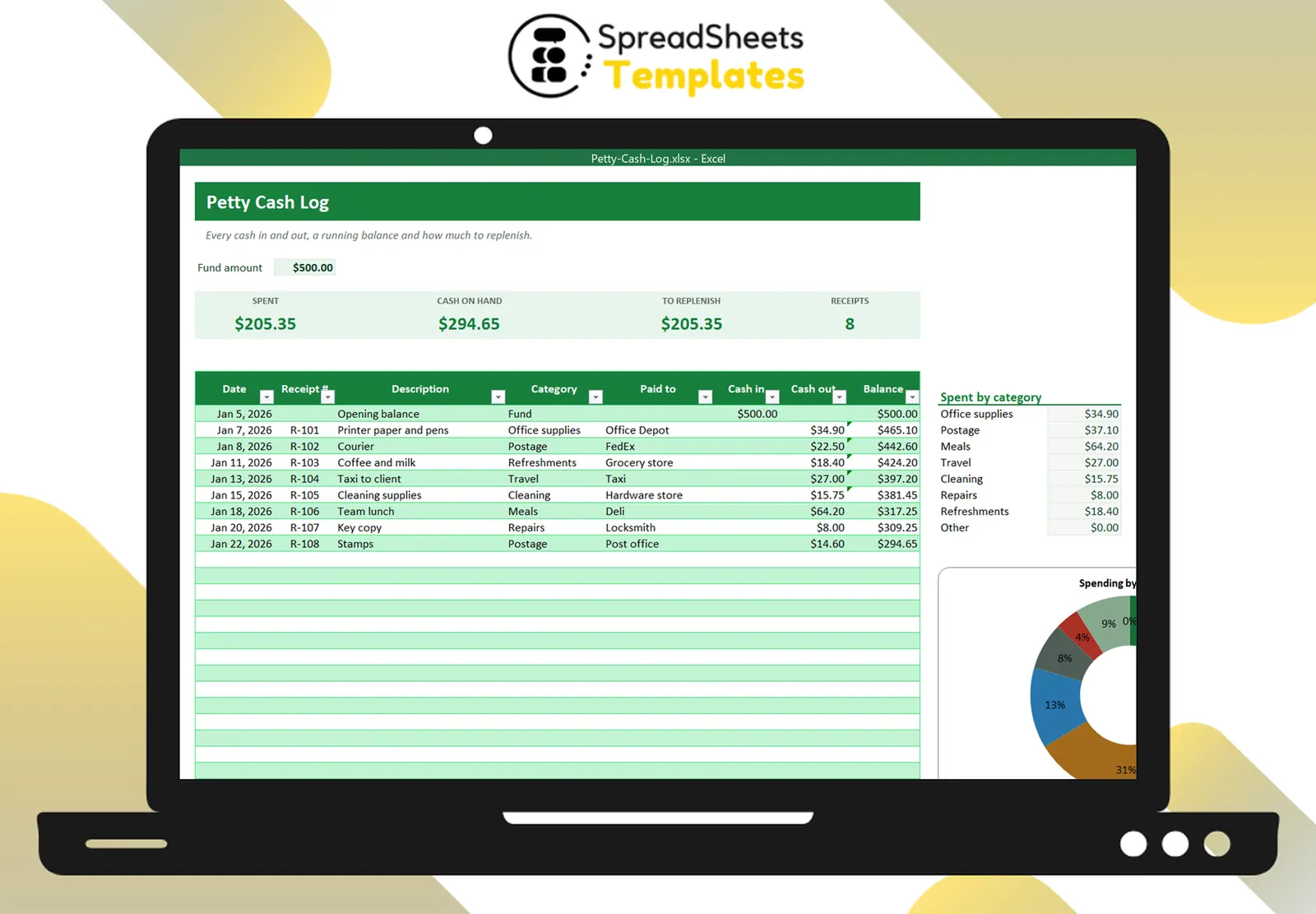
A petty cash log should have, for each movement:
- date;
- receipt number;
- description;
- category (office supplies, postage, meals, travel, cleaning, repairs…);
- who was paid;
- cash in or cash out;
- running balance.
Reconciling
Count the cash and compare with the running balance. If they don’t match:
- look for receipts not logged;
- check math and cash-in entries;
- record any difference as “over/short” and investigate if it repeats.
Replenishing
At month end (or when the box is low), total the cash out since the last replenishment. That’s the amount to withdraw from the bank to bring the box back to the fund amount. Categorizing the spending makes the bookkeeping entry simple.
Template
The Petty Cash Log records every movement with receipt number and category, keeps the running balance, shows cash on hand and the amount to replenish, and summarizes spending by category. For employee reimbursements, use the Employee Expense Report.