How to Set Savings Goals You Actually Reach
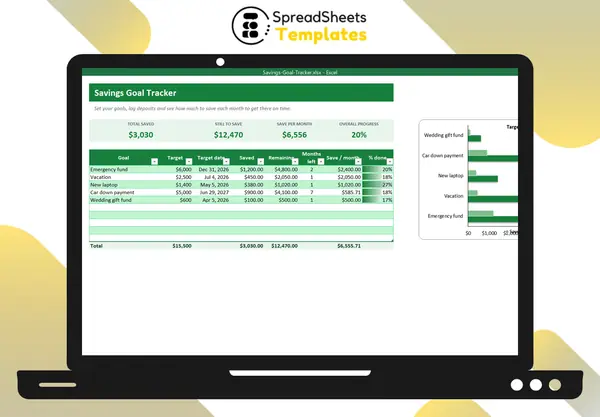
Saving “whatever is left at the end of the month” rarely works. Specific savings goals — an amount, a date and a monthly plan — turn saving from a hope into a habit.
Step 1: Make each goal specific
A good savings goal has three parts:
- What: “emergency fund”, “Lisbon trip”, “new laptop”.
- How much: the full amount you need.
- When: the date you want to have it.
“Save more” is a wish. “$2,500 for the vacation by July 1” is a goal.
Step 2: Prioritize
Not all goals are equal. A common order:
- Starter emergency fund (one month of expenses).
- High-interest debt payoff.
- Full emergency fund (3–6 months).
- Short-term goals (vacation, car, gadgets).
- Long-term goals (house, retirement — usually in investment accounts).
Step 3: Calculate the monthly amount
For each goal: (target − already saved) ÷ months left. In Excel:
=MAX(0, Target - Saved) / MAX(1, DATEDIF(TODAY(), TargetDate, "m"))
If the total of all monthly amounts is more than you can save, move a date or reduce a target — better now than in month eleven.
Step 4: Automate it
Set an automatic transfer on payday for the total monthly amount. You can keep all goals in a single high-yield savings account; a spreadsheet tracks how much belongs to each one.
Step 5: Track deposits and progress
Log every deposit with the date, amount and goal. Seeing a progress bar move from 40% to 60% is surprisingly motivating, and the monthly amount adjusts automatically if you fall behind or get ahead.
What to do when life happens
- You used money from a goal? Record it as a negative deposit; the monthly amount goes up.
- You got a windfall? Split it between goals and watch the dates become easy.
- A goal no longer matters? Delete it and move the money to the next priority.
Template
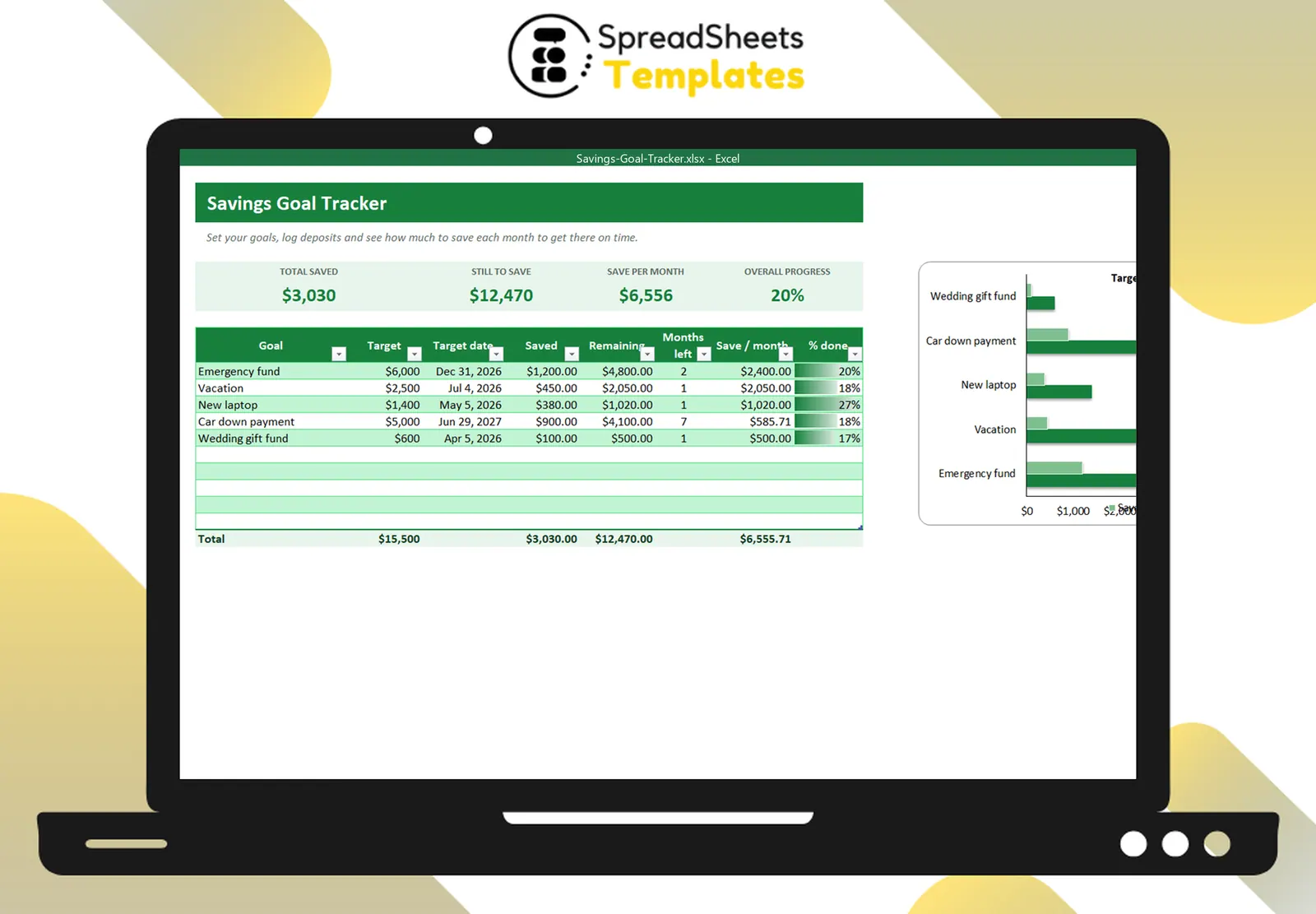
The Savings Goal Tracker is built exactly like this: goals with targets and dates, deposits by goal, the monthly amount needed, % done with progress bars and a target vs saved chart. For predictable yearly expenses (insurance, holidays, car maintenance), the Sinking Funds Tracker is a perfect companion.