How to Track Workout Progress (Strength and Cardio)
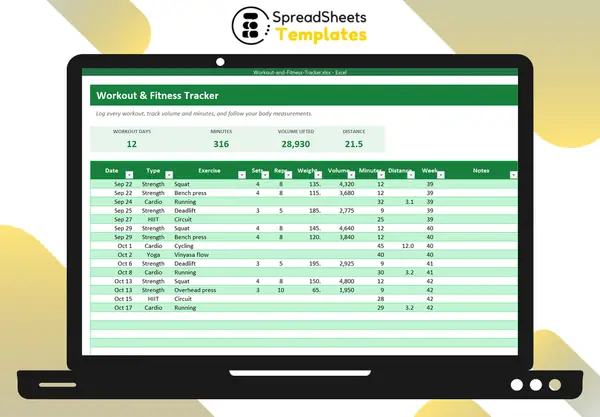
You can’t improve what you don’t measure. A simple workout log shows whether you’re actually getting stronger and fitter — and tells you what to do in the next session.
What to log
Strength: date, exercise, sets, reps, weight, notes (how it felt). Cardio: date, activity, minutes, distance, notes.
Training volume
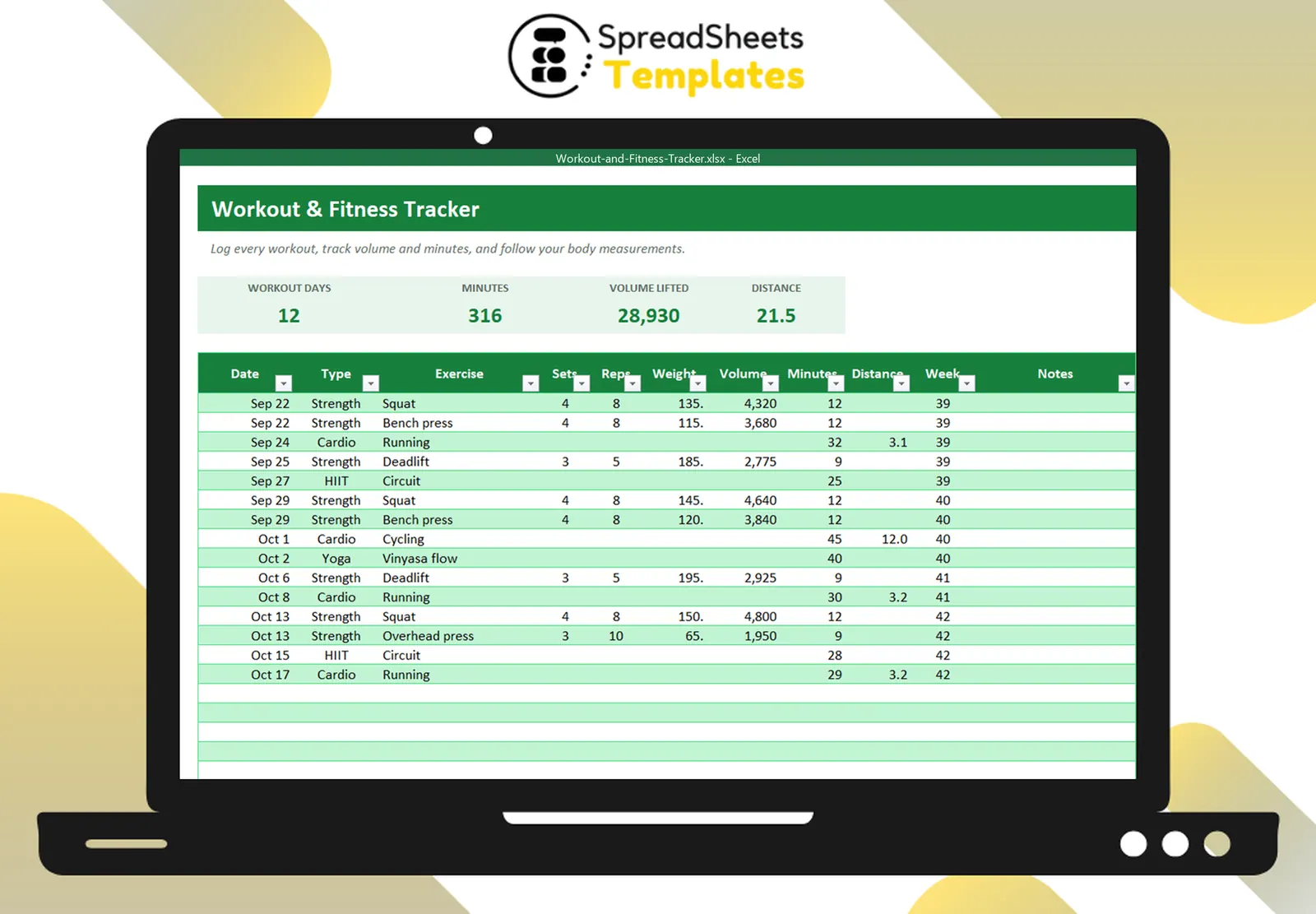
For strength training, volume = sets × reps × weight. 4 sets × 8 reps × 135 lb = 4,320 lb. Volume going up over weeks (with good form) means you’re progressing.
Progressive overload
The principle behind strength gains: gradually increase the challenge. Each week, try one of:
- add a little weight;
- add a rep or a set;
- reduce rest time.
Your log tells you exactly what you did last time, so you know what to beat.
Cardio progress
Track minutes and distance; pace (minutes ÷ distance) improving at the same effort is a great sign.
Balance your training
Total minutes by type (strength, cardio, HIIT, yoga) show whether your week is balanced. Many guidelines suggest 150+ minutes of moderate activity a week plus strength training twice a week.
Body measurements
The scale alone can mislead — muscle gain may hide fat loss. Record weekly: weight, body fat (if you can measure it consistently) and waist. Look at the trend over a month, not daily changes.
Template
The Workout & Fitness Tracker logs strength and cardio with automatic volume and week number, shows workout days, minutes, volume and distance, minutes by type and a body measurements table with a weight chart.